
Alite
•
April 22, 2026
•
3 minutes


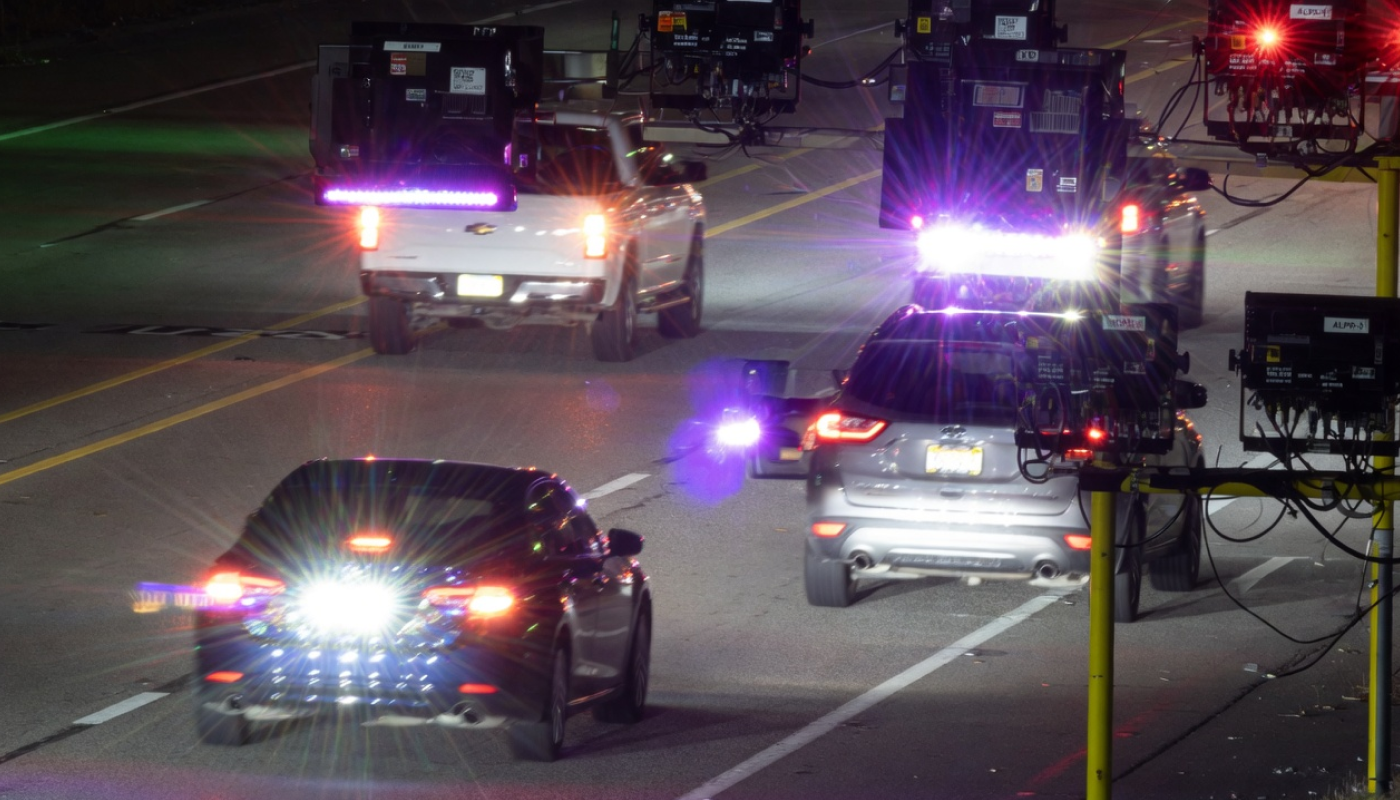
A reflection stress test examines how a license plate film behaves when exposed to repeated capture by traffic cameras using infrared illumination. Modern cameras rely on controlled IR light to ensure consistent license plate recognition across varying conditions. This makes surface reflectivity a critical parameter rather than a secondary detail.
An anti-radar sticker is engineered to alter how light returns to the sensor. Instead of blocking visibility, it introduces controlled variability into the reflected signal. A stress test focuses on whether this variability remains stable over time and across changing conditions. The objective is not to create a single strong effect, but to observe how the material behaves under continuous system interaction.
Infrared-based capture isolates reflective behavior more clearly than visible-light imaging. Since the system actively emits light, it expects a predictable return signal.
When this expectation is disrupted, the system must compensate. The degree to which it can do so depends on how consistent the reflected pattern remains during repeated captures. Even small irregularities become more visible under controlled IR exposure, making this type of testing especially sensitive to material performance.
License plate film under repeated ALPR exposure
When a vehicle passes multiple alpr cameras, the plate is captured several times within a short period. Each capture introduces slight differences in angle, speed, and lighting.
A license plate film must maintain its optical properties across all these variations to produce consistent interaction with the system.
Repeated exposure creates a sequence of reflection cycles. Each cycle tests whether the surface responds in the same way or introduces variability.
Typical outcomes observed during stress testing include:
These effects influence how reliably the system can reconstruct plate data over multiple frames. Over extended sequences, even subtle inconsistencies can accumulate and impact overall recognition stability.
The performance of an anti-radar sticker is closely tied to how it interacts with infrared light. Since traffic cameras rely on IR reflectivity, any modification to this behavior directly affects capture quality.
Unlike visible-light changes, infrared interaction is not noticeable to the human eye. This allows the plate to appear unchanged while producing different signals for the camera.
Under IR illumination, surfaces are expected to reflect light evenly. A modified surface introduces non-uniform reflection patterns.
These patterns can lead to localized overexposure, uneven brightness across characters, and reduced consistency in contrast detection. The key factor is not the magnitude of these effects, but their repeatability across different capture conditions.
As camera systems increase sensitivity, their dependence on stable reflection also grows. This makes controlled variability more relevant than isolated distortion effects.
Beyond controlled testing, environmental exposure significantly influences how a license plate film performs over time. Real-world conditions introduce variables that are absent in laboratory scenarios.
Temperature fluctuations, road debris, moisture, and UV exposure gradually affect the microstructure of the film surface. These changes can alter reflectivity and reduce the consistency of optical interaction with alpr cameras.
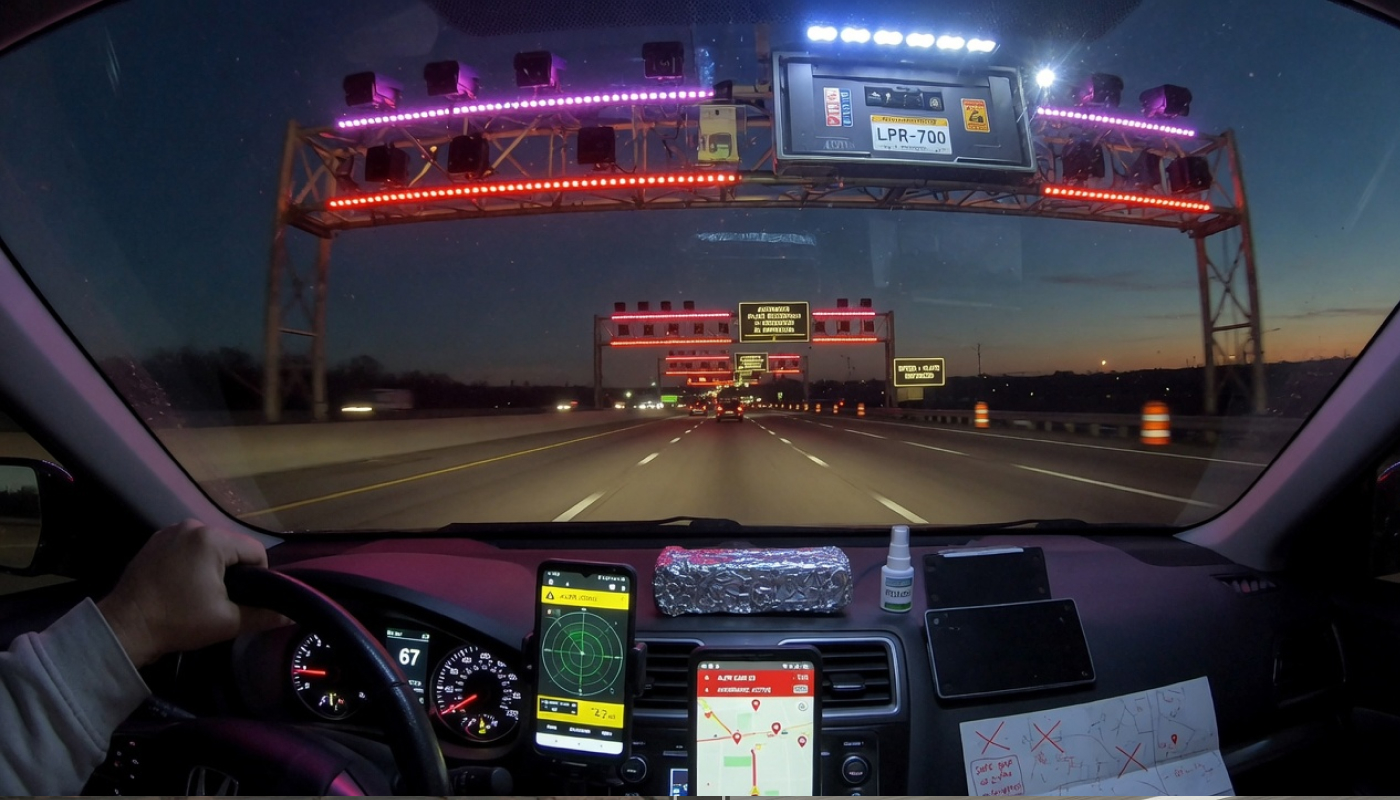
Over extended use, materials may experience subtle but cumulative changes. Even minor surface wear can affect how light is scattered and returned to the sensor.
Stable materials are designed to resist these effects, maintaining predictable reflection patterns despite external stress. This becomes especially important in environments with high exposure to sunlight and varying weather conditions.
A reflection stress test also evaluates how a license plate film performs over time. Environmental factors such as temperature, moisture, and surface wear influence reflective behavior.
If the material cannot maintain stable optical properties, its interaction with alpr cameras will change.
In long-term testing, several factors determine effectiveness. Stability of reflection under repeated IR exposure is critical, as is resistance to environmental degradation and the ability to maintain consistent behavior across different angles and speeds.
Solutions like Alite Nanofilm are designed to preserve these characteristics, maintaining predictable optical behavior under stress conditions. The goal is not to create maximum distortion, but to ensure that optical interaction remains consistent across time and usage cycles.
Another important aspect is cumulative interpretation. Traffic cameras do not rely on a single frame but combine multiple captures. Variability introduced in each frame can reduce overall recognition consistency.
Additionally, repeated exposure to infrared light can reveal weaknesses in materials that are not engineered for stability. Surfaces that degrade or shift over time tend to lose their ability to influence reflection patterns in a meaningful way.
External conditions further amplify this effect. Continuous exposure to sunlight, road debris, and temperature fluctuations gradually alters surface microstructure. Materials that are engineered to resist these changes maintain more consistent optical behavior during long-term use.
Ultimately, a reflection stress test demonstrates that the interaction between a license plate film and alpr cameras is dynamic. It is not defined by a single moment of capture, but by how consistently the material behaves across repeated cycles.
This reinforces a key principle: influencing license plate recognition is not about blocking visibility, but about controlling how stable the reflected signal remains under continuous observation.
Car
Nanofilm
Written by Alite
Read more
We cover privacy tech, license plate protection & smart ways to stay off surveillance. No gimmicks — just real tools that work. Explore more:
MORE FROM ALITE
Made by drivers, for drivers










Comments