
Alite
•
April 10, 2026
•
4 minutes


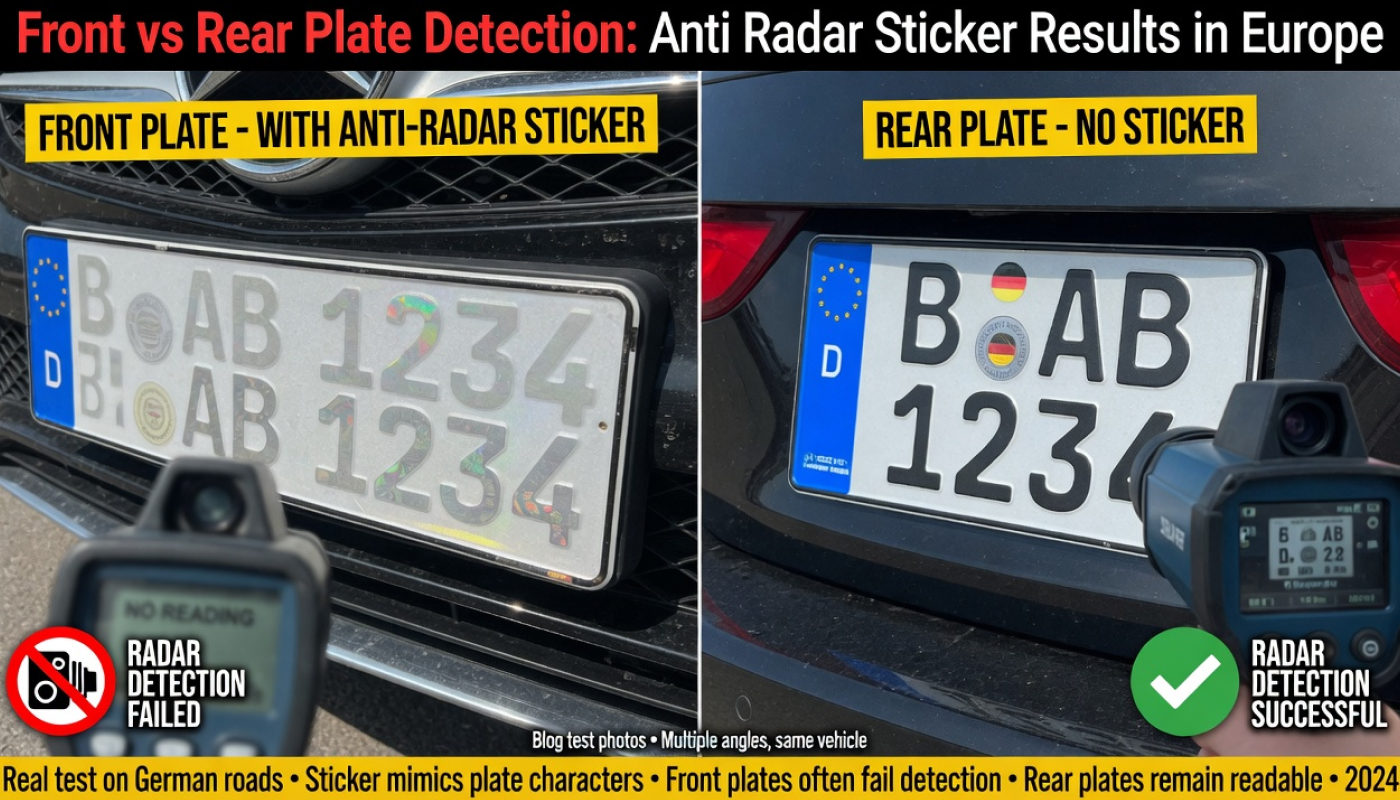
Modern traffic cameras across Europe are designed to capture license plates from multiple angles, including both front and rear positions. While many drivers assume that plate placement significantly affects detection, real-world testing shows that the difference is more nuanced. To explore this, a controlled comparison was conducted focusing on how front and rear plates behave under identical conditions, especially when using solutions like an anti radar sticker.
European monitoring systems rely on advanced ALPR technology combined with infrared illumination and high-speed image capture. These systems are optimized for consistency, meaning both front and rear plates are processed with high accuracy.
Rear plates are typically easier to capture due to alignment with roadside cameras. However, front-facing cameras are widely used in urban areas, intersections, and toll systems, ensuring full vehicle coverage.
A license plate camera blocker is often discussed in this context, but modern systems are designed to minimize blind spots. Cameras track movement, adjust exposure, and capture multiple frames, ensuring that plate data is recorded regardless of position.
To evaluate detection differences, vehicles were tested in real European traffic environments. Each vehicle passed through the same camera zones with both front and rear plates exposed under identical conditions.
One key variable in the experiment was the use of Alite Nanofilm, applied as an anti radar sticker. This allowed comparison between standard plates and modified surfaces that interact differently with camera systems.
The test included various scenarios such as direct approach, angled entry, and varying speeds. This ensured that the results reflected real-world driving rather than controlled laboratory conditions.
The results showed that rear plates maintained slightly higher detection consistency due to their alignment with most camera systems. Front plates, while still highly detectable, experienced more variation depending on angle and lighting.
However, the difference was not significant enough to prevent recognition. Modern traffic cameras successfully captured both front and rear plates across all test scenarios.
When license plate film like Alite Nanofilm was introduced, the results changed in a different way. Instead of relying on position, the film affected how the plate was interpreted by the system.
Key observations included:
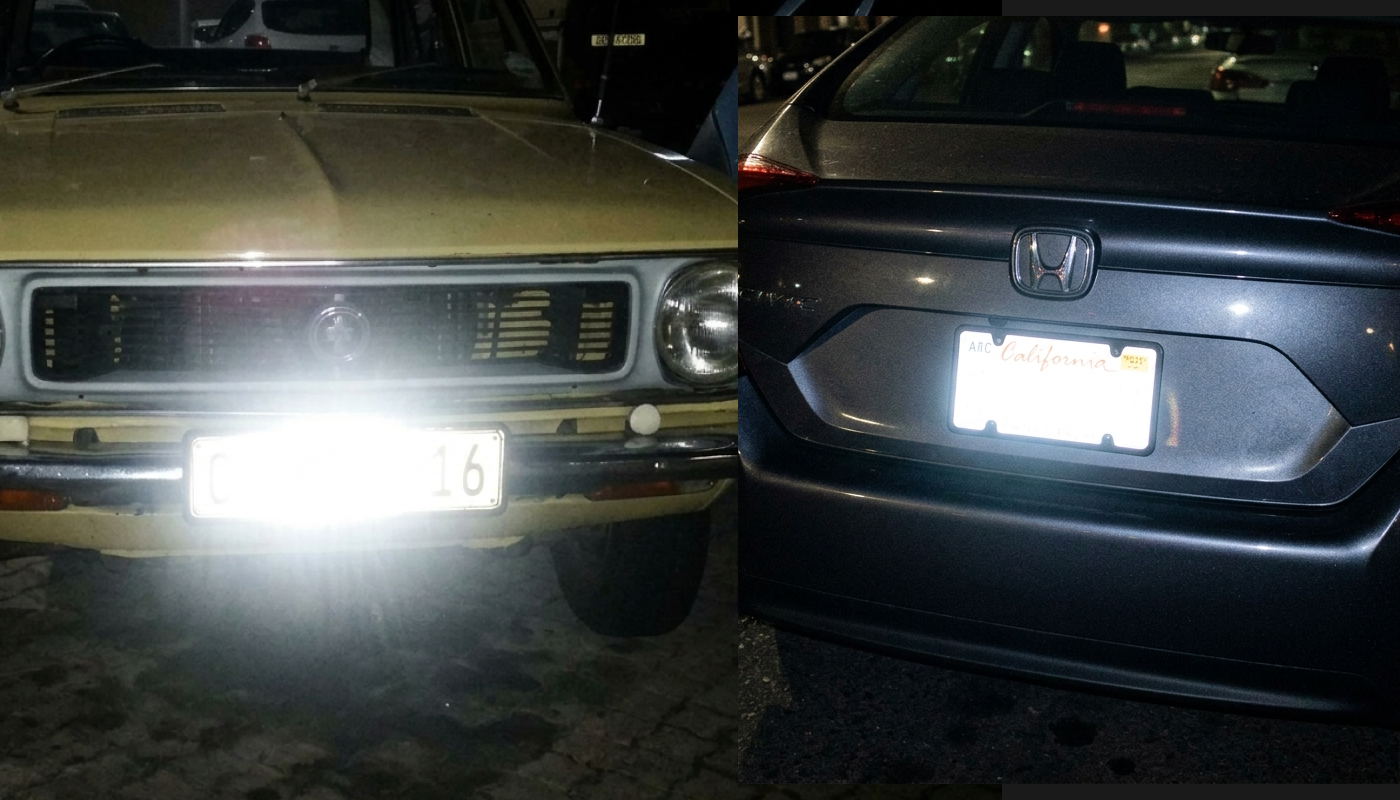
The effectiveness of an anti radar sticker does not depend on whether it is applied to the front or rear plate. Instead, it works by interacting with light and camera sensors.
Unlike traditional approaches, which rely on avoiding detection, this method changes how data appears to the system. A license plate camera blocker or film-based solution influences reflectivity and contrast, which are critical for recognition algorithms.
Because both front and rear plates are exposed to infrared illumination, the effect remains consistent regardless of placement. This is why the performance of license plate film solutions is not tied to vehicle orientation.
European roads present a wide range of conditions, including varying lighting, weather, and camera configurations. Despite these differences, modern systems maintain high detection reliability.
In real traffic scenarios, both front and rear plates are continuously monitored. Multi-angle setups ensure that even if one view is less optimal, another camera can compensate.
The use of Alite Nanofilm demonstrates that changes in plate perception can influence capture results more effectively than relying on position alone. This highlights a shift from physical placement to data interpretation in modern monitoring systems.
The comparison between front and rear plate detection confirms that position alone does not determine capture success. While rear plates may have a slight advantage in alignment, modern traffic cameras are designed to detect both equally well.
Solutions like anti radar sticker and license plate film operate on a different principle - altering how the plate is read rather than where it is placed. This makes their performance consistent across both front and rear applications.
In European conditions, where monitoring systems are highly advanced, the key factor is not plate position but how clearly the data is presented to the camera.
Car
Vehicle
Nanofilm
Written by Alite
Read more
We cover privacy tech, license plate protection & smart ways to stay off surveillance. No gimmicks — just real tools that work. Explore more:
MORE FROM ALITE
Made by drivers, for drivers










Comments
Ben10_1993
20 April 2026
Didn’t realize front vs rear barely matters now
Ageeeas_ddi
24 April 2026
interesting how it’s more about light than position 🤔
SSS_OWL
19 April 2026
Rear always felt easier to catch, now I see why