
Alite
•
April 9, 2026
•
4 minutes


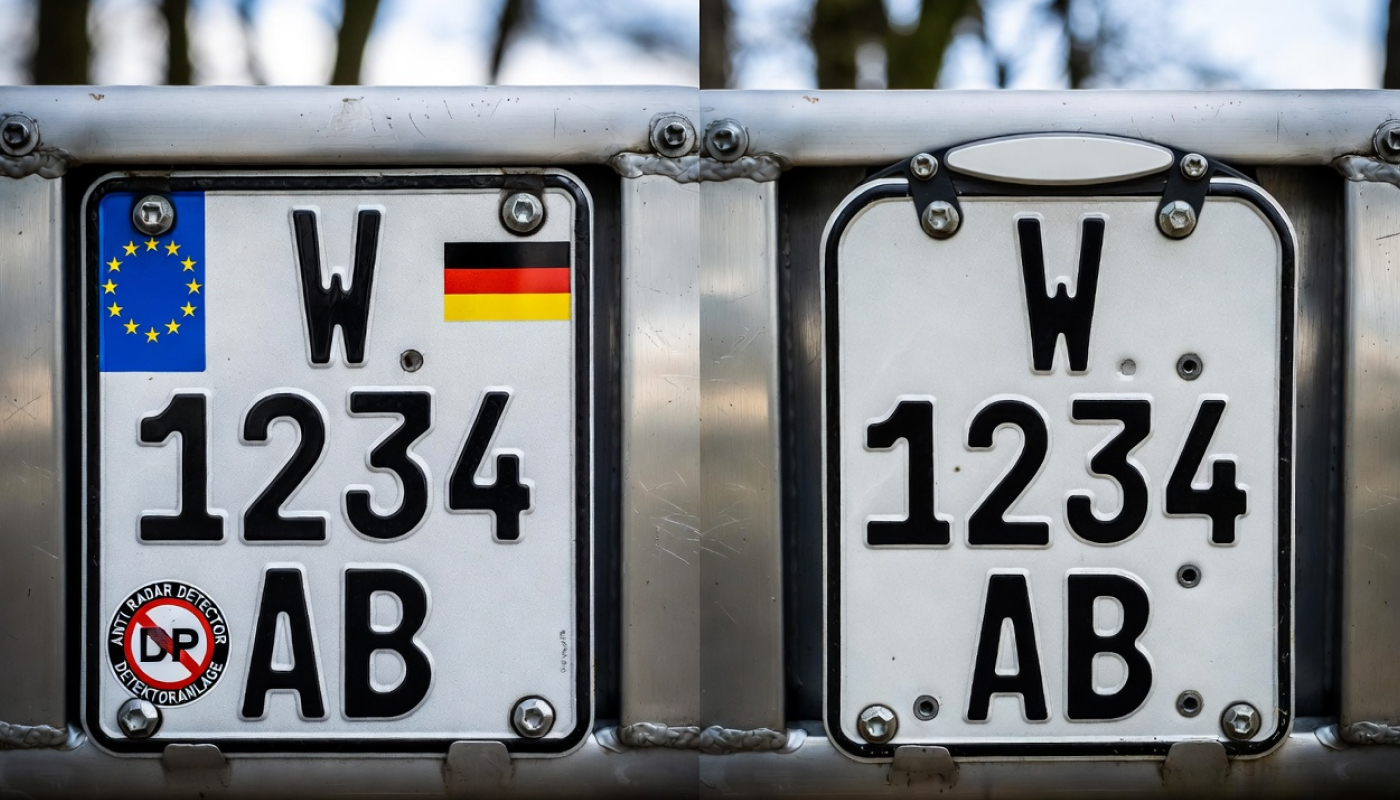
Germany has one of the most structured systems for motorcycle plates in Europe. Unlike cars, motorcycles use compact plates with reduced surface area and tighter layouts. This changes how plates are captured and interpreted by automated systems.
From a motorcycle riding tips perspective, many riders assume that a smaller plate makes detection harder. In reality, compact formats are fully integrated into German camera systems. Plate size alone does not reduce capture accuracy.
This is where an anti radar sticker becomes relevant. Instead of relying on dimensions, it focuses on how the plate surface behaves under light and camera exposure.
Additionally, compact plates often create a false sense of advantage. Riders may assume reduced visibility equals reduced detection, but modern systems are designed to compensate for size differences.
A common belief is that compact motorcycle plates help hide license plate details. However, German systems are specifically calibrated for these formats.
Even with reduced size, plates remain highly reflective and structured. This means detection stays stable because cameras rely on contrast and reflection, not surface area.
Motorcycle plates are positioned differently than car plates, which affects how they are captured. The angle and placement introduce additional variables that influence reflection.
Key physical factors include:
These elements define how a license plate camera blocker approach should be evaluated in real conditions.
With compact plates, surface behavior becomes more important than size. A smaller area means any optical change has a stronger effect in each captured frame.
An anti radar sticker introduces controlled variation in reflection. Instead of a uniform return signal, the plate produces a more complex optical response.
This becomes more visible due to the compact format and sharper mounting angles.
Motorcycle plates are often captured from multiple angles in quick succession. This creates a sequence of frames where consistency matters.
A license plate camera blocker approach based on optical design introduces variation between those frames, making capture less uniform.
In dynamic riding conditions, these differences become more pronounced, especially when speed and angle continuously change.
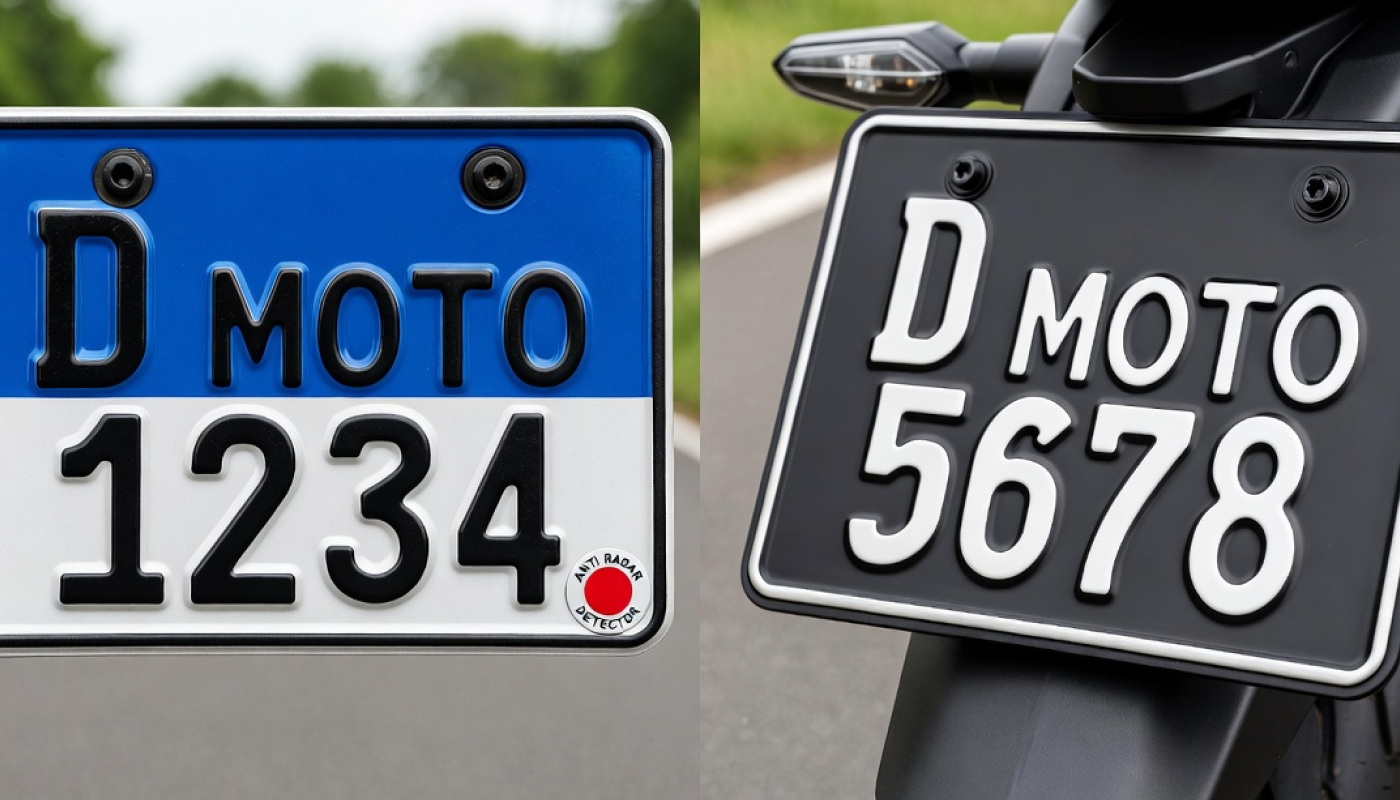
German systems are optimized for precision, especially when detecting motorcycle plates. Compact plates are expected to produce stable, high-contrast images.
However, when optical behavior changes, this expectation is disrupted. Instead of a predictable reflection, the system receives a more complex signal.
Observed optical differences include:
This demonstrates that plate geometry and surface behavior are two different factors. While size defines shape, optical design defines interaction.
These differences become especially relevant in real traffic, where conditions are constantly changing rather than fixed.
Alite Nanofilm represents a shift from relying on plate size to controlling optical response. As an anti radar sticker, it integrates directly into the plate without changing its visible appearance.
Key advantages include:
From a hide license plate perspective, this approach focuses on interaction with light rather than physical dimensions.
Motorcycles operate under more dynamic conditions than cars. Plate position changes with movement, and lighting varies constantly.
Alite Nanofilm is designed to handle these variables, making it effective for compact plates where small optical changes have a stronger impact.
This makes it particularly suitable for everyday riding scenarios, not just controlled conditions.
Final insight for motorcycle riding tips and anti radar sticker
The key takeaway is that compact plates do not reduce detection on their own. Modern systems are built to recognize these formats with high accuracy.
What truly matters is how the plate behaves under light. This is where optical solutions provide a measurable difference.
By combining real riding conditions with controlled surface behavior, an anti radar sticker like Alite Nanofilm offers a more advanced and consistent approach than relying on plate size alone.
Moto
Vehicle
Nanofilm
Written by Alite
Read more
We cover privacy tech, license plate protection & smart ways to stay off surveillance. No gimmicks — just real tools that work. Explore more:
MORE FROM ALITE
Made by drivers, for drivers










Comments
darllame_lane
13 April 2026
Didn’t expect night cameras to work like that 😳
riderMaaax
17 April 2026
Always thought night = less detection… guess no
Speed Ghost
12 April 2026
Nice breakdown, finally makes sense how light works