

Alite
•
April 22, 2026
•
3 minutes


Spending eight hours moving through multiple alpr cameras zones highlights a simple reality: modern license plate readers are designed for redundancy. They do not rely on a single image or a single capture moment. Instead, they collect multiple frames, from multiple angles, across multiple locations.
This fundamentally changes the question. It is no longer about whether a plate can be “hidden,” but whether detection remains consistent across repeated exposures. A license plate camera blocker in the traditional sense does not address this problem, because modern systems are built to compensate for partial inconsistencies.
Each camera interaction is only one data point. Over time, systems aggregate multiple readings and attempt to reconstruct a consistent result.
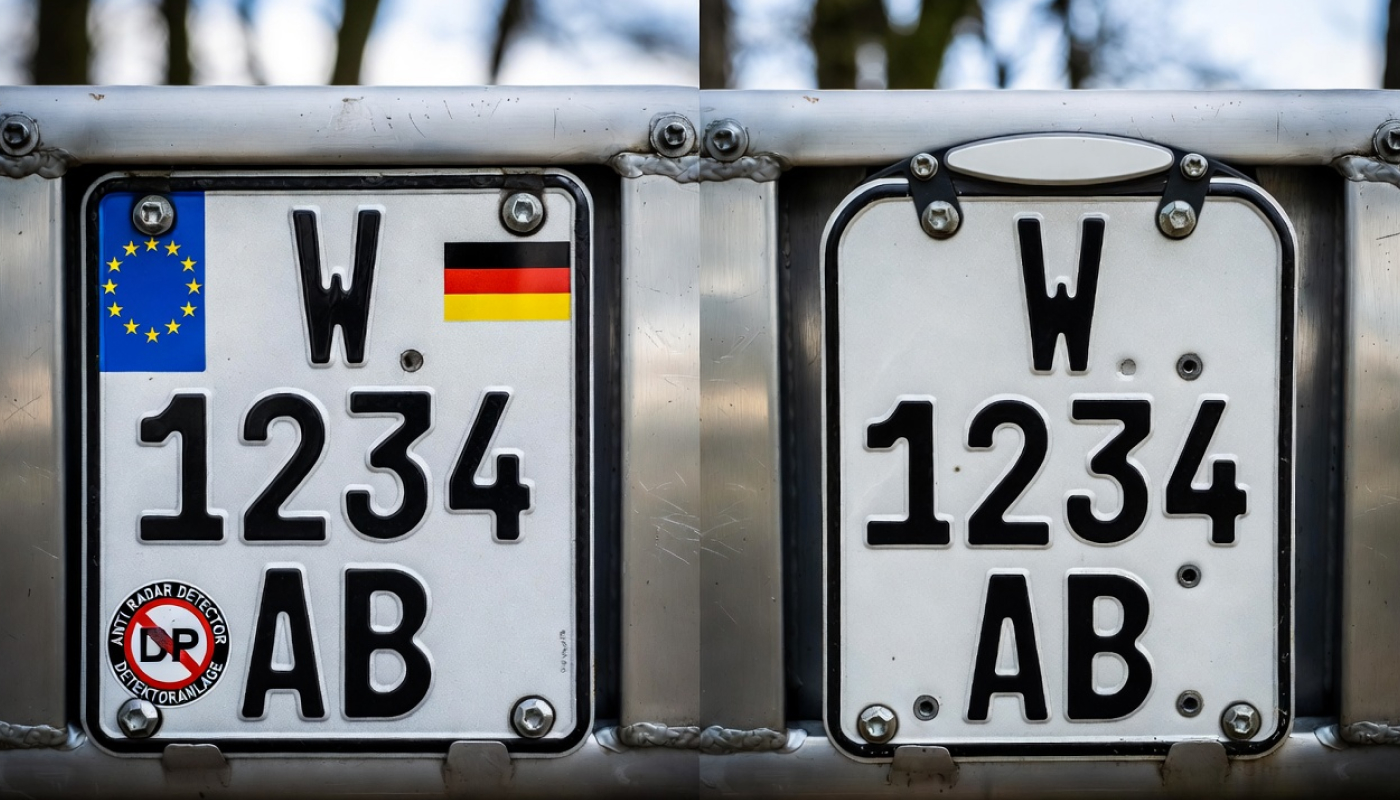
An anti radar sticker interacts with this process by introducing variability into individual captures. The key effect is not elimination, but reduction of consistency across frames. As exposure cycles accumulate, even minor differences between frames can influence how the system resolves ambiguous character data.
License plate readers under continuous capture conditions
During extended driving, license plate readers operate under constantly changing inputs - speed, lighting, angle, and environmental conditions all vary.
These systems are optimized to normalize these variables. However, they still depend on predictable reflectivity and contrast to extract characters reliably.
When a license plate film modifies surface behavior, the captured signal becomes less uniform. Instead of receiving consistent data, the system processes fluctuating input.
Typical outcomes include:
These inconsistencies do not prevent detection entirely, but they reduce the reliability of aggregated results over time. In long sequences, this variability can introduce uncertainty into pattern reconstruction.

A license plate camera blocker assumes that blocking visibility will prevent detection. In modern ALPR systems, this assumption no longer holds.
These systems are trained to handle occlusion, noise, and incomplete data. They rely on pattern reconstruction rather than single-frame clarity.
A surface-based solution, such as a license plate film, operates differently. It does not block the camera, but alters how light is reflected and interpreted.
This directly affects the input data used by recognition algorithms. Even small deviations in reflection can influence segmentation and OCR stages within the system. As algorithms become more advanced, they rely even more on consistency rather than isolated clarity.
Anti radar sticker performance over extended driving
Over long driving periods, the effectiveness of an anti radar sticker depends on consistency. It must maintain its optical behavior across changing conditions and repeated exposure cycles.
Unlike short tests, extended driving reveals how materials perform under stress, temperature variation, and environmental factors.
In continuous driving scenarios, several factors define effectiveness:
Solutions like Alite Nanofilm are designed to preserve these characteristics over time, ensuring that interaction with detection systems remains stable.
Another important factor is cumulative capture. When a vehicle passes through multiple alpr cameras, each system may interpret the plate differently. Variability introduced at each point can reduce the overall consistency of the dataset.
Additionally, time plays a role. Over several hours of driving, even slight environmental changes - such as temperature shifts or surface contamination - can influence optical behavior. Materials that maintain стабильные характеристики under these conditions tend to perform more predictably.
This does not eliminate detection, but it changes how reliably a plate can be reconstructed from multiple readings.
Ultimately, after hours of driving through monitored zones, one conclusion becomes clear: avoiding detection entirely is unlikely. However, influencing how consistently a plate is interpreted across multiple captures is possible.
This reflects the real strategy in 2026 - not invisibility, but controlled variability in how automated systems process visual data.
Car
Written by Alite
Read more
We cover privacy tech, license plate protection & smart ways to stay off surveillance. No gimmicks — just real tools that work. Explore more:
MORE FROM ALITE
Made by drivers, for drivers






Comments