

Alite
•
February 10, 2026
•
4 minutes


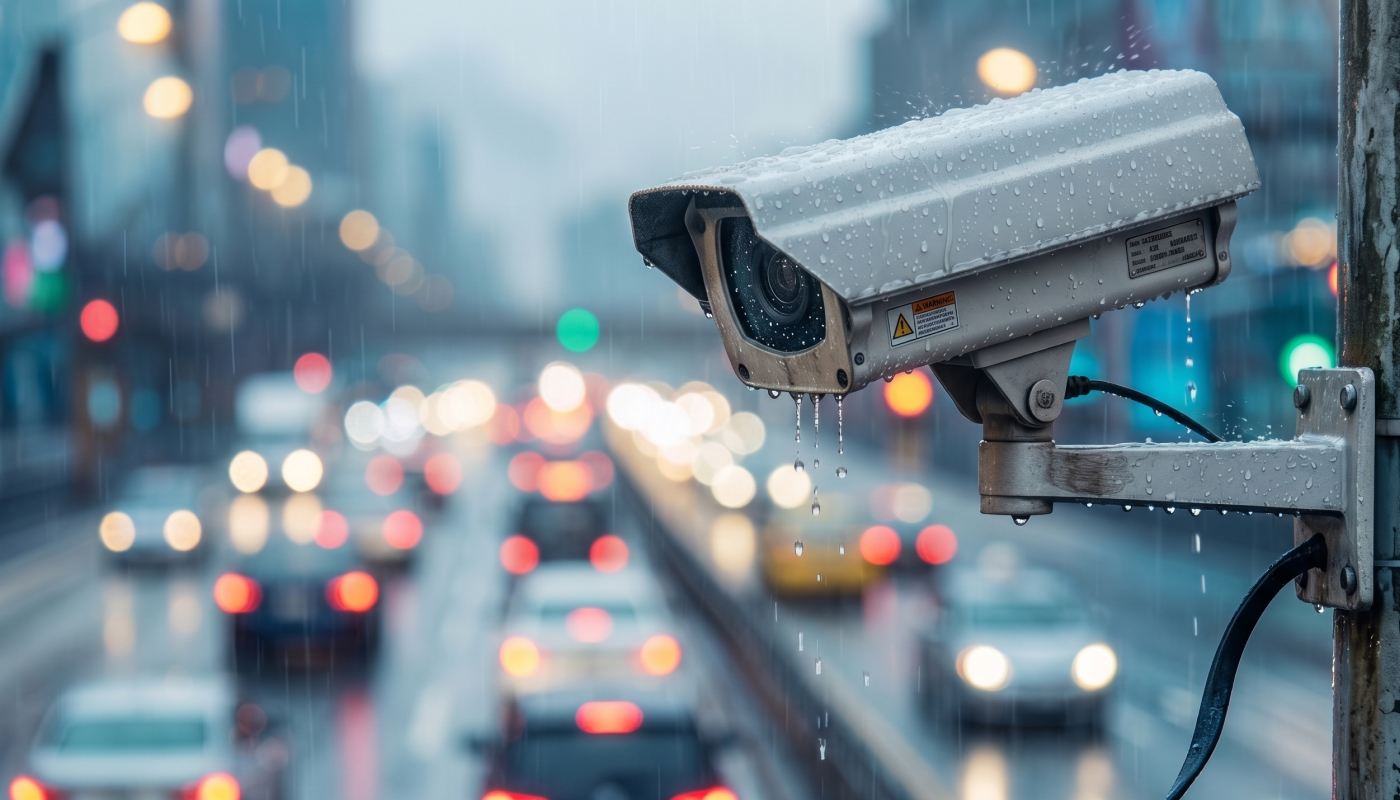
Modern roads are no longer defined only by asphalt, signs, and traffic flow. They are shaped by another, invisible layer data. Every camera mounted on a highway, intersection, or toll gate constantly scans vehicles, interpreting their plates using light, reflection, and machine vision. In this silent technological battleground, license plate film has emerged as one of the most sophisticated tools for restoring balance between visibility and privacy.
Unlike physical covers or mechanical shields, advanced optical films operate on the level of physics, not hardware. They change not what drivers see, but what cameras interpret. The result is a subtle, elegant shift in the long-standing war between surveillance systems and reflective surfaces a war fought entirely with light.
To understand why number plate film has become such a powerful innovation, it helps to look at how ALPR systems function. Automated recognition relies on two components: light emitted from the camera and light returned from the license plate. Traditional plates are designed to return light in a predictable pattern, enabling crisp, high-contrast images under any conditions.
This predictability is exactly what optical films challenge. Modern license plate film uses engineered micro-layers that respond differently to certain wavelengths. Infrared, visible light, and flash illumination each interact with the surface in unique ways. To the human eye, the plate remains unchanged. To a machine, reflection becomes inconsistent.
This asymmetry is not a flaw. It is the design.
The idea is simple: maintain perfect readability for humans while introducing optical complexity for machines. In a world where sensors expect uniformity, controlled irregularity becomes a form of quiet resistance.
Reflective materials were originally created for safety, not privacy. Reflective number plate film helped emergency services and road authorities capture plate details even in darkness or foggy conditions. This was a step forward for traffic safety until ALPR systems began using the same reflectivity to extract data around the clock.
This is where next-generation films change the story. Instead of returning light directly back to the camera, they scatter or redirect it using microstructures. These distortions are tiny, almost imperceptible, yet enough to disrupt automated interpretation. The plate appears bright and clear to humans but becomes less cooperative under machine vision.
This is the core strength of optical privacy technology: it doesn’t overpower the camera. It misleads it - gently, precisely, scientifically.

The term invisible number plate often sparks imagination, but the real meaning is far more subtle. The plate is not invisible to humans. Instead, it becomes partially invisible to algorithms.
Machine vision relies on pattern consistency. When the light response on a plate becomes irregular meaning brighter in some angles, darker in others, or slightly skewed in contrast - the recognition software receives incomplete information. Humans can still read the plate easily because our eyes compensate for irregularities. ALPR systems cannot.
This creates a paradox: What remains fully visible to people becomes less visible to machines.
This paradox is the foundation of optical privacy - a balance between transparency and control.
Among today’s privacy tools, the anti camera license plate sticker is one of the most remarkable examples of how small engineering choices can reshape technological power.
These stickers introduce engineered optical effects such as:
None of these effects hinder the driver or distort the plate visually. Yet together they create uncertainty for automated systems that expect perfection.
This is the essence of optical privacy tools: They do not remove information - they introduce ambiguity.
In a system that depends on certainty, ambiguity becomes a form of protection.
The rise of number plate film is not just a technological trend. It reflects a shift in the psychological relationship between drivers and digital infrastructure.
Drivers are not trying to hide their identity. They are trying to regain a sense of autonomy in an environment where visibility no longer feels neutral.
The most common motivations include:
• Reducing passive machine exposure Not every scan needs to be recorded, stored, or analyzed.
• Preserving human readability without aiding automated systems Drivers want a natural look - not bulky covers or dark tints.
• Fighting the feeling of being constantly monitored Optical films soften the intensity of digital oversight.
• Seeking privacy through sophistication, not obstruction Tools like license plate films offer technological elegance.
• Balancing safety and visibility The plate remains readable without becoming a digital broadcast.
This emotional dimension is why optical films resonate deeply: they empower drivers quietly, without confrontation or disruption.
The struggle between cameras and plates has always revolved around light. Surveillance systems rely on perfect reflection; privacy tools introduce calculated imperfection. In this silent war, license plate film, reflective number plate film, and modern anti camera license plate sticker technologies represent a refined response to the age of automated vision.
They do not hide drivers. They simply restore equilibrium - giving humans a voice in a world increasingly defined by sensors.
Car
Nanofilm
Vehicle
Written by Alite
Read more
We cover privacy tech, license plate protection & smart ways to stay off surveillance. No gimmicks — just real tools that work. Explore more:
MORE FROM ALITE
Made by drivers, for drivers










Comments
Thomas Reed
12 February 2026
The ‘light vs cameras’ concept is really well framed
Sophia Clarke
13 February 2026
Balanced, technical, but still easy to follow
Daniel Foster
15 February 2026
Feels like a thoughtful analysis, not just marketing.