
Alite
•
February 15, 2026
•
4 minutes


Modern speed cameras have changed the way vehicles are monitored. Their imaging systems combine infrared illumination, multi-angle optics, and machine-learning algorithms designed to achieve highly accurate license plate capture in virtually any environment. Because of this increased sophistication, many drivers have turned to various optical and mechanical solutions aimed at creating more controlled plate visibility. These methods do not replace the plate or remove characters; instead, they regulate how the plate interacts with different wavelengths of light.
Alite Nanofilm is one of the most technically advanced examples in this category. It uses engineered optical layers that influence infrared response, allowing the plate to remain readable for the human eye while delivering a more stable interaction with camera illumination. To understand why such solutions exist, we must look at how drivers have historically attempted to hide license plate details from unpredictable glare, surface reflections, and sensor overexposure.
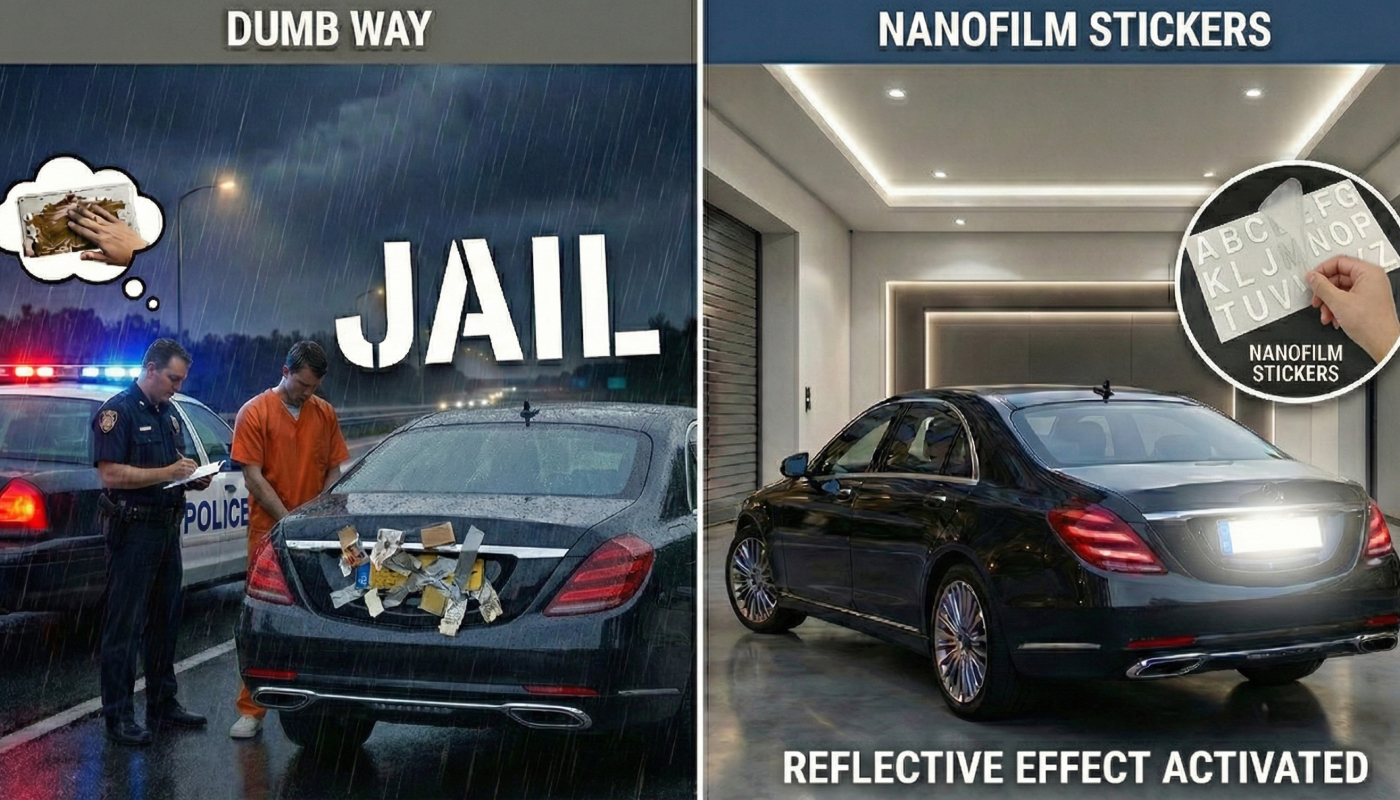
For years, drivers experimented with basic solutions such as angled frames or glossy sprays. These approaches were never designed to withstand modern imaging systems, especially those using IR pulses. Early antiradar stickers created a simple reflective burst in the visible spectrum, but today’s sensors ignore these tricks entirely.
Advanced enforcement hardware is no longer fooled by directional light scatter or surface gloss. Instead, cameras analyze contrast, structural patterns, and micro-reflections. As a result, older methods fail instantly, and drivers look for engineered optical materials-not improvised ones. This shift is the reason more people evaluate options like an anti radar sticker or micro-layered optical films designed explicitly for IR environments.
A growing number of drivers prefer optical, non-mechanical solutions because they are subtle and maintain the natural appearance of the plate. Infrared-sensitive layers, directional scatters, and microdiffusion all play a role in reducing harsh highlights that cameras use to extract plate details.
The most effective technologies influence IR behavior without altering how the plate looks in visible light. This is exactly where Alite Nanofilm stands out. Unlike outdated antiradar stickers, it is engineered as a multi-layer system that ensures smooth light diffusion and consistent optical density. Drivers value this controlled response because strong IR pulses are the core mechanism of modern license plate capture systems.
Below are the most common optical approaches used today:
These solutions are not designed to erase characters; they are designed to manage how cameras interpret reflected light.

Some drivers rely on mechanical devices rather than surface films. These include sliding mounts, retracting frames, and tilt mechanisms. Their goal is not to damage or remove the plate but to alter its geometry during complex imaging conditions.
While mechanical systems offer dramatic change, they also carry drawbacks: moving parts require maintenance, space for installation, and long-term consistency under vibration. Many drivers prefer a passive method rather than a physical device. However, mechanical systems demonstrate how the challenge has evolved-drivers seek tools that reduce overexposure and improve privacy in a digitized environment where speed cameras observe from multiple angles.
By contrast, optical approaches like Alite Nanofilm work without movement. They simply regulate the interaction between plate and illumination, offering a quieter, maintenance-free alternative.
Alite Nanofilm does not function like traditional antiradar stickers, which rely on simple visible-light reflections. Instead, it was built for multi-spectrum environments where IR pulses dominate. Its micro-layered design ensures consistent scattering, meaning the plate retains its natural readability for people but interacts with IR in a way that minimizes excessive reflectivity.
Another advantage is stability. Drivers in different climates—coastal, urban, high-sun regions have observed that optical behavior of the film remains unchanged over time. This long-term reliability is essential in areas with dense camera networks. The film’s ability to maintain clarity for the driver while controlling IR highlights helps reduce unpredictable visibility problems that often trigger automatic re-captures and inconsistent imaging.
For many, the value of Alite Nanofilm lies not in spectacle but in engineering: a quiet, consistent way to hide license plate irregularities that cameras often amplify.
The evolution of speed cameras forced drivers to abandon outdated tricks and explore methods based on physics, not improvisation. Optical solutions like Alite Nanofilm demonstrate that modern plate protection is no longer about blocking visibility-it is about regulating how sensors interpret reflected light. Mechanical devices still exist, but optical engineering has become the preferred approach for drivers seeking subtle, reliable, long-term stability.
As camera technology continues to advance, the demand for engineered solutions-not gimmicks—will only increase. And within this landscape, Alite Nanofilm remains one of the most technically grounded options for improving optical consistency without altering the plate’s natural appearance.
Car
Nanofilm
Vehicle
Written by Alite
Read more
We cover privacy tech, license plate protection & smart ways to stay off surveillance. No gimmicks — just real tools that work. Explore more:
MORE FROM ALITE
Made by drivers, for drivers












Comments
Matthew Collins
15 February 2026
Clear explanation of why old tricks stopped working
Isabella Wright
19 February 2026
Well structured comparison of optical vs mechanical
Christopher Hall
17 February 2026
Feels technical but still practical