
Alite
•
February 17, 2026
•
4 minutes


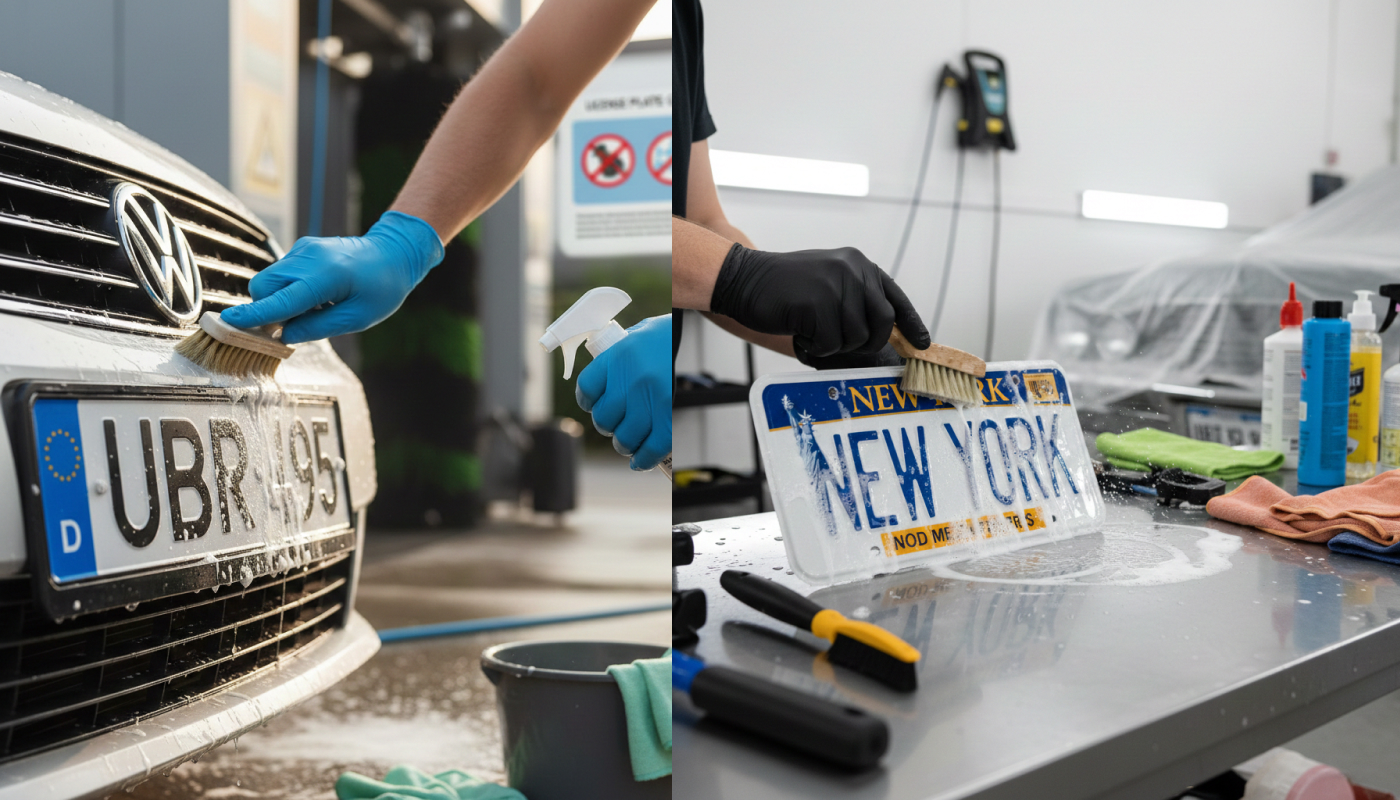
License plate cleaning rules are no longer just about keeping a car visually tidy. In modern traffic environments, plates are continuously scanned by optical systems that rely on contrast, reflectivity, and surface condition. Dirt, residue, and improper cleaning methods can significantly affect how a plate behaves under camera illumination. This is especially relevant for vehicles using a license plate film, where surface integrity directly impacts performance.
A clean plate supports accurate human readability while maintaining consistent optical behavior. Over-cleaning, harsh chemicals, or abrasive tools can unintentionally damage coatings or alter reflectivity. As more drivers adopt advanced surface solutions such as number plate film, understanding correct cleaning practices becomes essential for long-term reliability.
Road grime is not uniform. Dust, salt, oil, and organic debris accumulate differently depending on climate and driving conditions. These layers change how light reflects from the plate surface, often creating glare or uneven contrast under artificial illumination. When a license plate film cover is present, residue buildup can interfere with its designed optical properties.
Improper cleaning may be just as harmful as neglect. Aggressive solvents can degrade film layers, while rough sponges may cause micro-scratches. Over time, these defects scatter light unpredictably, affecting both visibility and consistency. For drivers using number plate reflective film, gentle and regular cleaning is key to preserving the intended surface behavior.
Effective plate cleaning focuses on preservation rather than force. The goal is to remove contaminants while keeping the surface uniform and intact. This approach applies equally to bare plates and those protected by advanced films.
The most effective practices include:
These steps help maintain even reflectivity and reduce optical artifacts. For plates using reflective number plate film, consistency is especially important, as uneven drying or residue can change how cameras interpret the surface.
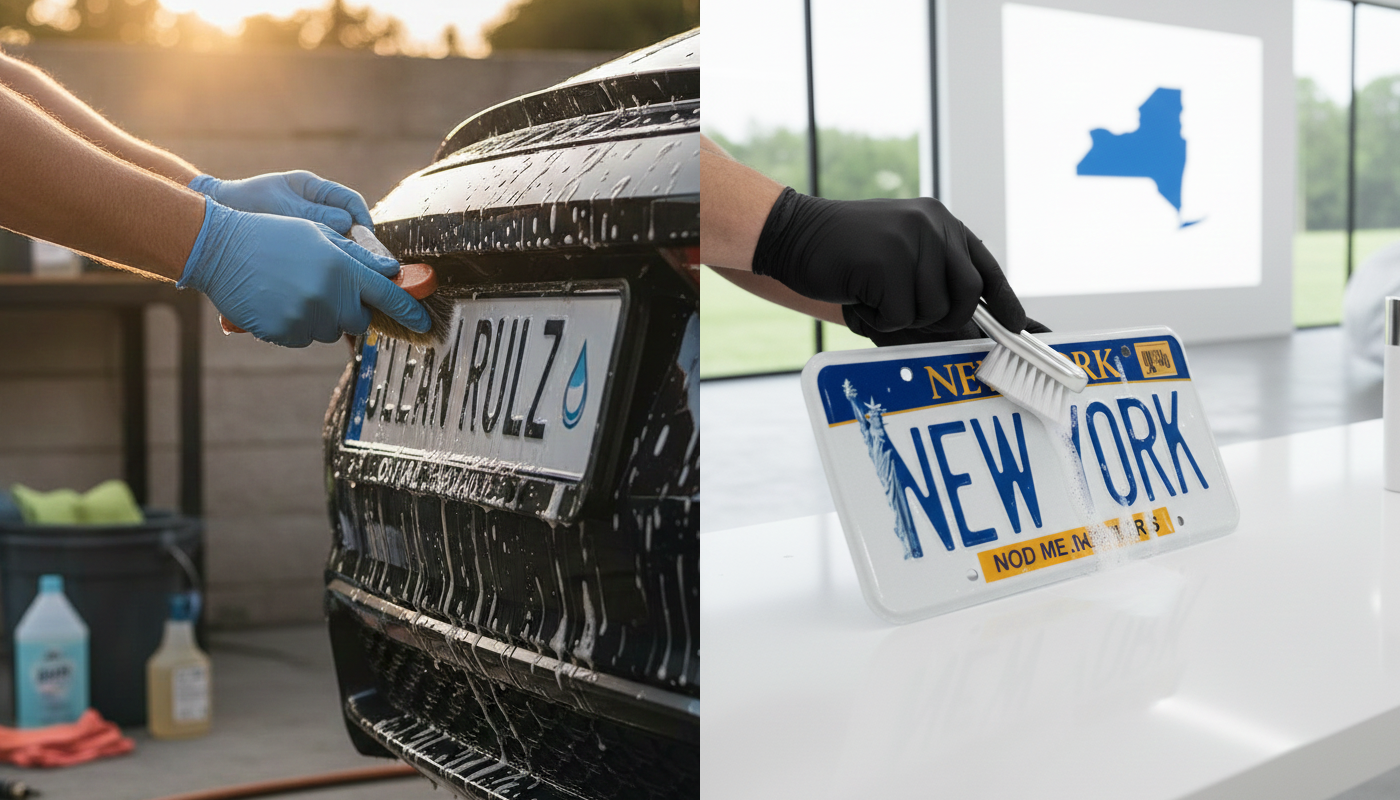
Many common cleaning habits are unsuitable for modern plates. High-pressure washers, alcohol-based solvents, and abrasive brushes can all cause damage at the microscopic level. Even if the plate looks clean afterward, its optical behavior may be altered in subtle ways. This is a common issue with improperly maintained license plate film surfaces.
Another frequent mistake is polishing. While polishing may enhance shine, it often increases specular reflection, which can lead to glare under camera lighting. For plates using number plate film, maintaining a matte-consistent finish is more important than visual gloss.
How often a plate should be cleaned depends largely on environment. Urban driving exposes plates to exhaust residue and fine dust, while winter conditions introduce salt and moisture. Coastal regions add mineral deposits that can crystallize on the surface. All of these factors influence how a license plate film cover performs over time.
Regular light cleaning is preferable to infrequent aggressive washing. By addressing buildup early, drivers reduce the risk of residue bonding to the surface. This approach helps preserve the designed reflectivity profile of number plate reflective film and keeps the plate visually stable across different lighting conditions.
Alite Nanofilm is designed to integrate seamlessly with standard cleaning routines. Its nanostructured surface is engineered to maintain consistent light interaction even when exposed to everyday contaminants. However, like any precision surface, it benefits from proper care. Gentle cleaning supports the film’s long-term performance without introducing surface irregularities.
Unlike rigid covers, nanofilm-based solutions do not add thickness or curvature. This makes them easier to maintain and less prone to dirt traps along edges. When cleaned correctly, a license plate film such as Alite Nanofilm retains its uniform appearance and predictable optical response, even in challenging environments.
License plate cleaning rules are ultimately about consistency. A well-maintained plate behaves predictably under both human observation and automated systems. Dirt, scratches, and improper cleaning disrupt that balance, especially on advanced surfaces. By following gentle, methodical cleaning practices, drivers protect both readability and surface integrity.
As technologies like reflective number plate film become more common, plate care evolves from a cosmetic task into a functional routine. Clean plates are not just clearer—they are more stable, more reliable, and better suited to today’s sensor-rich roads.
Car
Vehicle
Nanofilm
Written by Alite
Read more
We cover privacy tech, license plate protection & smart ways to stay off surveillance. No gimmicks — just real tools that work. Explore more:
MORE FROM ALITE
Made by drivers, for drivers












Comments
Daniel Hughes
19 February 2026
Practical and well structured
Sofia Ramirez
21 February 2026
Didn’t realize cleaning could affect optical behavior
Marcus Lane
22 February 2026
Clear advice without overcomplicating it.