
Alite
•
February 20, 2026
•
4 minutes


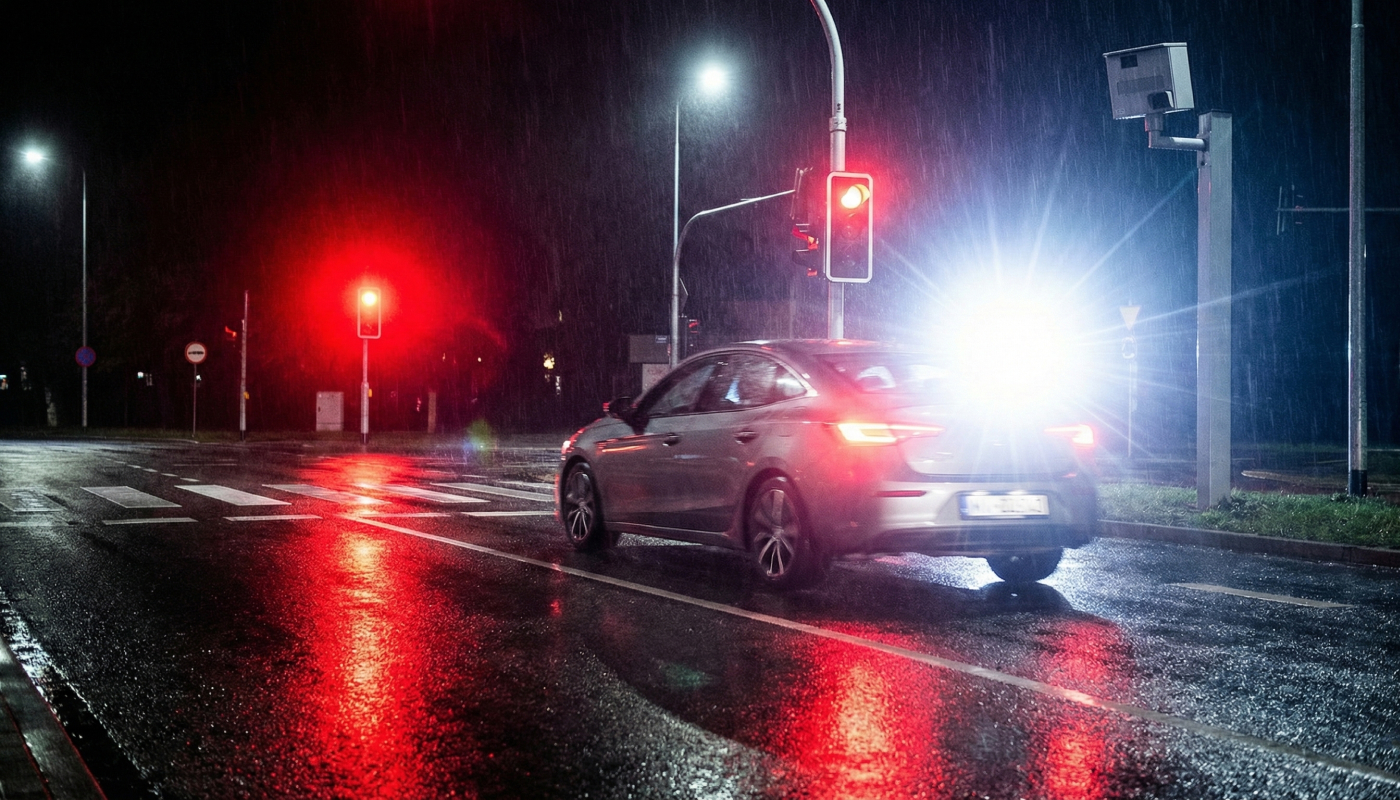
Red light cameras are designed to monitor vehicle behavior at signalized intersections, focusing on timing rather than speed. Their primary role is to determine whether a vehicle crosses a defined stop line after the traffic signal has changed state. Unlike speed cameras, these systems rely heavily on synchronization between sensors and visual capture.
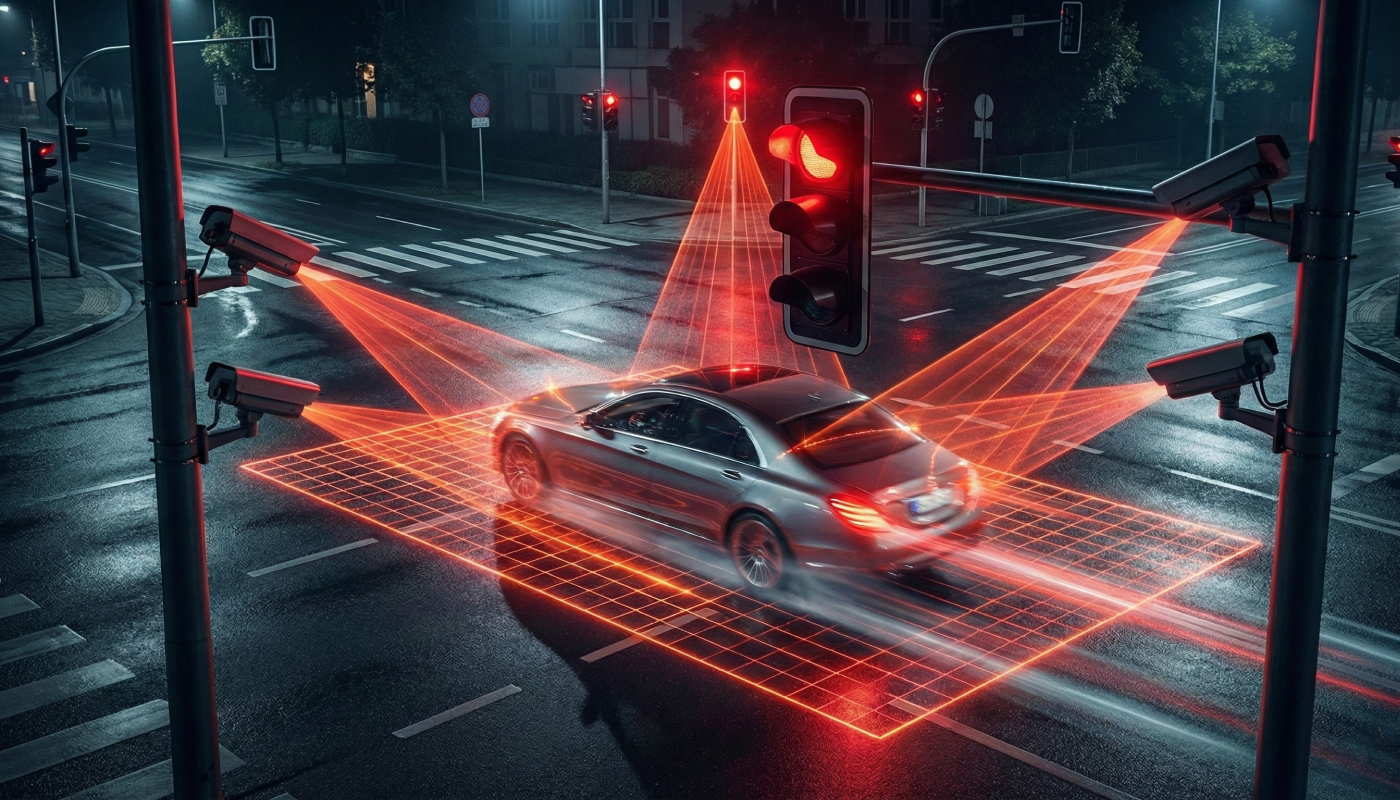
At a technical level, red light cameras operate as part of an integrated intersection system. They communicate directly with traffic signal controllers, allowing the camera to know the exact moment a light turns red. This precise timing is critical, as even fractions of a second can determine whether a vehicle is flagged.
The process is automated and continuous, requiring no human observation. Once triggered, the system captures visual evidence used to associate the event with a specific vehicle.
Traffic light cameras do not simply record video nonstop and analyze it later. Instead, they are activated by specific sensor inputs embedded in or near the roadway. These sensors detect vehicle movement relative to the stop line.
Common detection methods include:
When a vehicle enters the intersection after the signal has turned red, the system triggers the camera. Typically, multiple images are captured: one showing the vehicle before the stop line, another within the intersection, and sometimes a third confirming signal state. This sequence provides contextual evidence rather than a single snapshot.
The accuracy of this process depends on precise calibration between sensors, signal timing, and camera exposure.
Once triggered, red light cameras shift from detection to identification. This is where imaging systems become critical. Cameras use high-resolution sensors combined with artificial illumination to capture a readable image of the license plate.
Most systems rely on infrared illumination or visible flash to ensure clarity regardless of ambient lighting. The license plate is expected to reflect this light in a standardized way, allowing characters to stand out clearly against the background.
Key assumptions built into plate capture include:
If these assumptions hold, automated character recognition software can extract the plate number reliably.
An anti camera number plate sticker interacts with the imaging stage rather than the detection stage of red light enforcement. These materials do not affect sensors that determine whether a vehicle entered the intersection illegally. Instead, they influence how the license plate appears at the moment of capture.
Such materials are engineered to modify reflection patterns during short, intense bursts of light. When the camera flash or infrared illuminator activates, the sticker can scatter or redirect light, reducing contrast or creating glare in the captured image.
Factors influencing this interaction include:
As a result, a plate may look normal to the human eye but behave differently under automated imaging conditions.
A license plate film represents a more refined approach to optical interaction. Instead of relying on thick reflective layers, advanced films use micro- or nanostructures to manage how light is returned to the camera sensor.
Alite Nanofilm is an example of this technology. Its optical behavior is embedded within the material itself, allowing it to remain visually unobtrusive in everyday conditions while responding selectively to infrared or flash-based illumination used by traffic light cameras.
Because the interaction is structural rather than superficial, performance remains stable over time. There is no dependence on surface coatings that may degrade unevenly. The film does not block light; it alters the way light is redistributed during the camera’s exposure window.
This approach highlights how material science intersects with automated imaging systems at modern intersections.
Intersection enforcement systems are built around precise timing and predictable optics. Red light cameras determine violations through sensor data and signal synchronization, then rely on cameras to associate that event with a vehicle.
Materials like an anti camera number plate sticker or advanced license plate film do not interfere with detection. Instead, they introduce optical complexity during the identification phase, challenging assumptions about how plates reflect artificial light.
Technologies such as Alite Nanofilm illustrate how subtle material properties can influence automated perception without altering normal appearance. As traffic light cameras continue to evolve, the interaction between sensors, illumination, and reflective materials will remain a key factor in how violations are recorded and interpreted.
Car
Nanofilm
Vehicle
Written by Alite
Read more
We cover privacy tech, license plate protection & smart ways to stay off surveillance. No gimmicks — just real tools that work. Explore more:
MORE FROM ALITE
Made by drivers, for drivers










Comments
Michael Hayes
20 February 2026
Clear explanation of detection vs identification stages.
Laura Bennett
22 February 2026
Helpful breakdown of intersection sensor systems.
Ryan Clarke
24 February 2026
Well structured and technically balanced.