
Alite
•
February 22, 2026
•
4 miutes


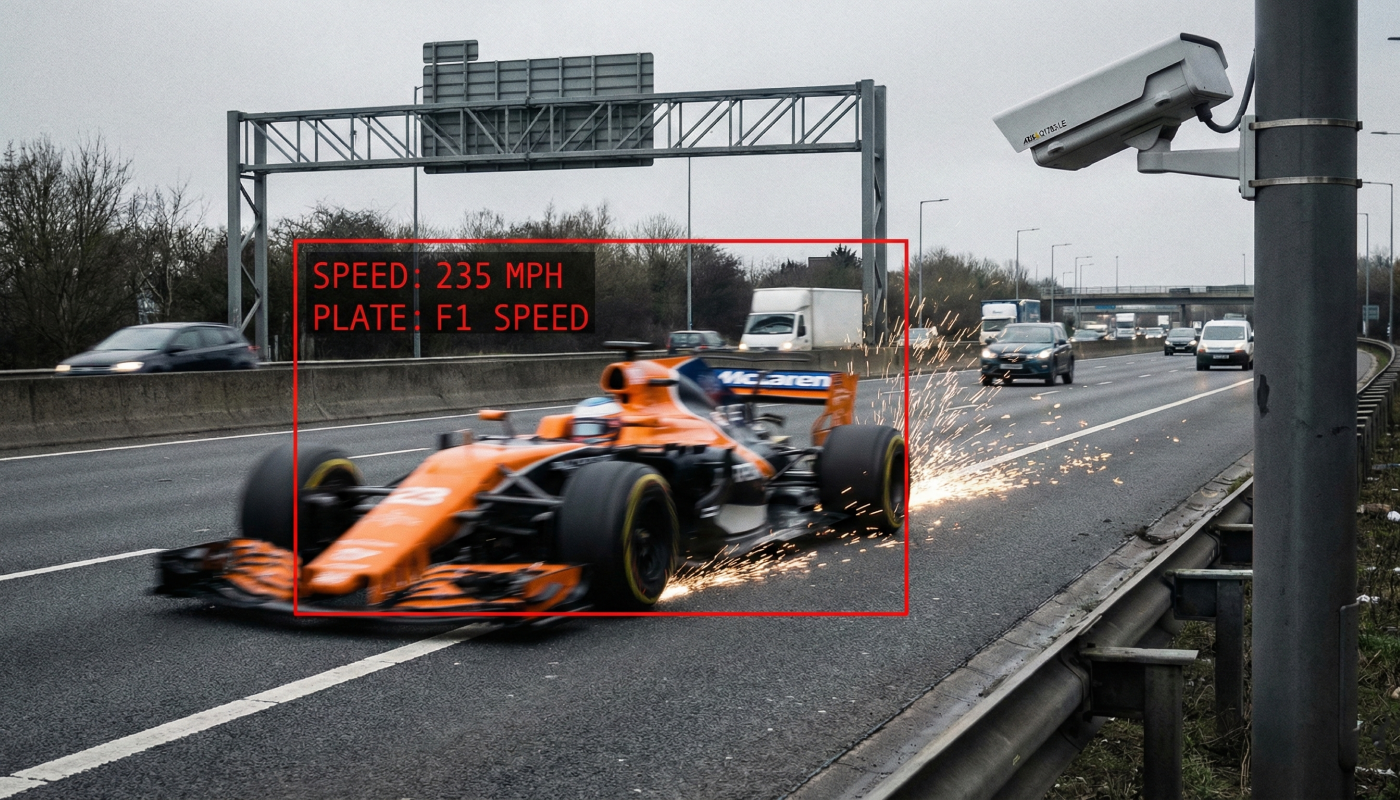
Modern traffic infrastructure relies heavily on automated recognition systems, and few technologies are as central as license plate readers. Questions about license plate reader speed often arise when drivers notice how quickly vehicles are identified in motion. Unlike manual observation, these systems are designed to process information in milliseconds, even when a car is traveling at highway speeds.
What makes this possible is the combination of high-frame-rate cameras, fast shutters, and real-time processing. Plate readers are no longer limited by human reaction time. Instead, they operate continuously, capturing and analyzing visual data as vehicles pass through a monitored zone. Understanding this speed helps explain why automated systems feel almost instantaneous from a driver’s perspective.
To grasp how fast cameras operate, it helps to look at the relationship between motion and capture. Modern readers are optimized to recognize plates at speeds well above typical urban limits. This capability defines real-world how fast cameras read plates under varying conditions.
Key technical factors that enable high-speed reading include:
Together, these elements allow systems to read plates on vehicles moving at 60–120 km/h or more, depending on setup. The faster the vehicle, the more critical precise timing and optical clarity become.
At the core of every reader is automated license plate recognition software. Once an image is captured, processing begins immediately. This is where the real speed advantage lies. Algorithms can extract characters, compare them against databases, and log results in fractions of a second.
This process does not rely on a single image. Instead, multiple frames are analyzed, increasing accuracy even when one frame is partially obscured. The system selects the clearest data available and discards the rest. This approach allows cameras to maintain performance even in challenging lighting or weather.
Because recognition happens digitally, the limiting factor is rarely vehicle speed. Instead, it is image quality, contrast, and how predictably the plate reflects light during capture.
The rise of anti-radar stickers reflects growing interest in how optical materials interact with automated systems. Despite the name, these products do not affect radar speed measurement. Their influence appears during the imaging stage, when the camera attempts to capture a readable plate.
Optical materials can alter reflection patterns under infrared or flash illumination. When light is scattered or redirected, contrast may decrease, making character extraction more difficult. This interaction highlights the optical assumptions built into plate readers.
Factors influencing reader performance include:
When these variables deviate from expected norms, recognition speed and accuracy can be affected.
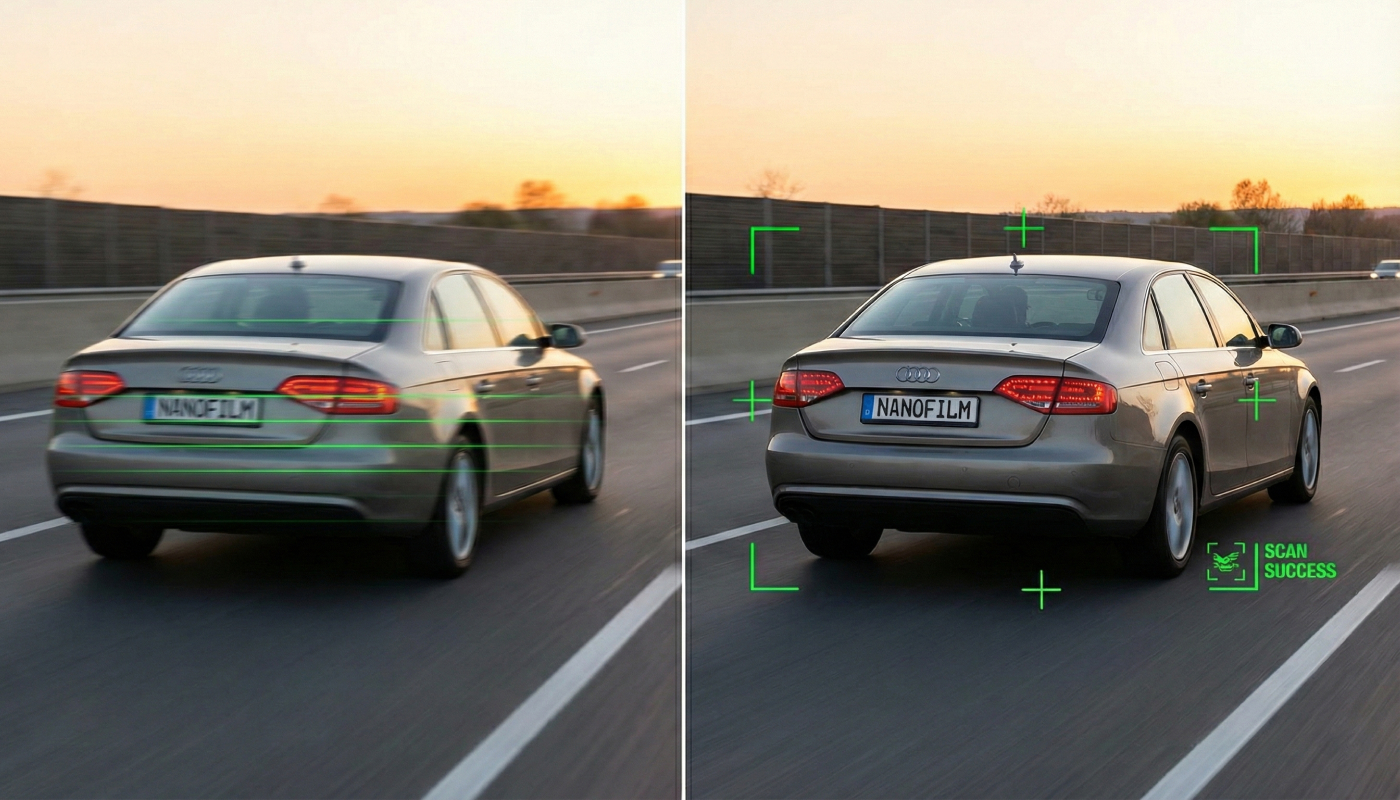
A license plate camera blocker is often misunderstood as something that stops detection entirely. In reality, advanced solutions focus on optical interaction rather than blocking sensors. A hide license plate approach in this context means influencing how the plate appears to automated imaging systems.
Alite Nanofilm is an example of nanostructured material designed to manage light behavior during capture. Instead of thick reflective layers, it uses micro- and nanoscale structures that respond selectively to infrared or flash-based illumination. To the human eye, the plate looks unchanged, but to a camera operating at high speed, the optical response can differ.
This matters because license plate readers depend on predictable reflections to maintain speed. When that predictability changes, the system may require more frames or processing to extract characters, subtly affecting performance without altering normal visibility.
The emphasis on speed is not about catching vehicles faster, but about reliability. High-speed processing ensures that systems can handle dense traffic, multiple lanes, and continuous flow without data loss. The faster a reader can scan, the more vehicles it can process accurately.
As traffic volumes increase, systems must scale without sacrificing precision. This is why modern readers are engineered to exceed typical speed requirements. The technology is designed not just for today’s roads, but for future environments with higher automation and data integration.
In this context, optical materials and surface behavior become increasingly relevant. Even small changes in how a plate reflects light can influence recognition efficiency at scale.
License plate readers are capable of scanning moving vehicles at remarkable speeds, often far beyond what drivers expect. Advances in imaging, processing, and software allow recognition to occur in milliseconds, even at highway velocities. Understanding license plate reader speed means recognizing that the system’s limits are optical and computational rather than mechanical.
As automated enforcement evolves, the interaction between cameras and materials gains importance. Solutions like anti-radar stickers, license plate camera blocker concepts, and nanostructured films such as Alite Nanofilm focus on how cameras see rather than how fast they operate. In a world of rapid automated recognition, speed and optics are inseparable—and both shape how modern traffic systems function.
Car
Nanofilm
Vehicle
Written by Alite
Read more
We cover privacy tech, license plate protection & smart ways to stay off surveillance. No gimmicks — just real tools that work. Explore more:
MORE FROM ALITE
Made by drivers, for drivers







Comments
Jason Miller
22 February 2026
Clear explanation of speed vs optical limits
Natalie Brooks
23 February 2026
Helpful breakdown of high-frame-rate capture
Aaron Lewis
24 February 2026
Balanced technical insight without exaggeration