
Alite
•
February 13, 2026
•
4 minutes


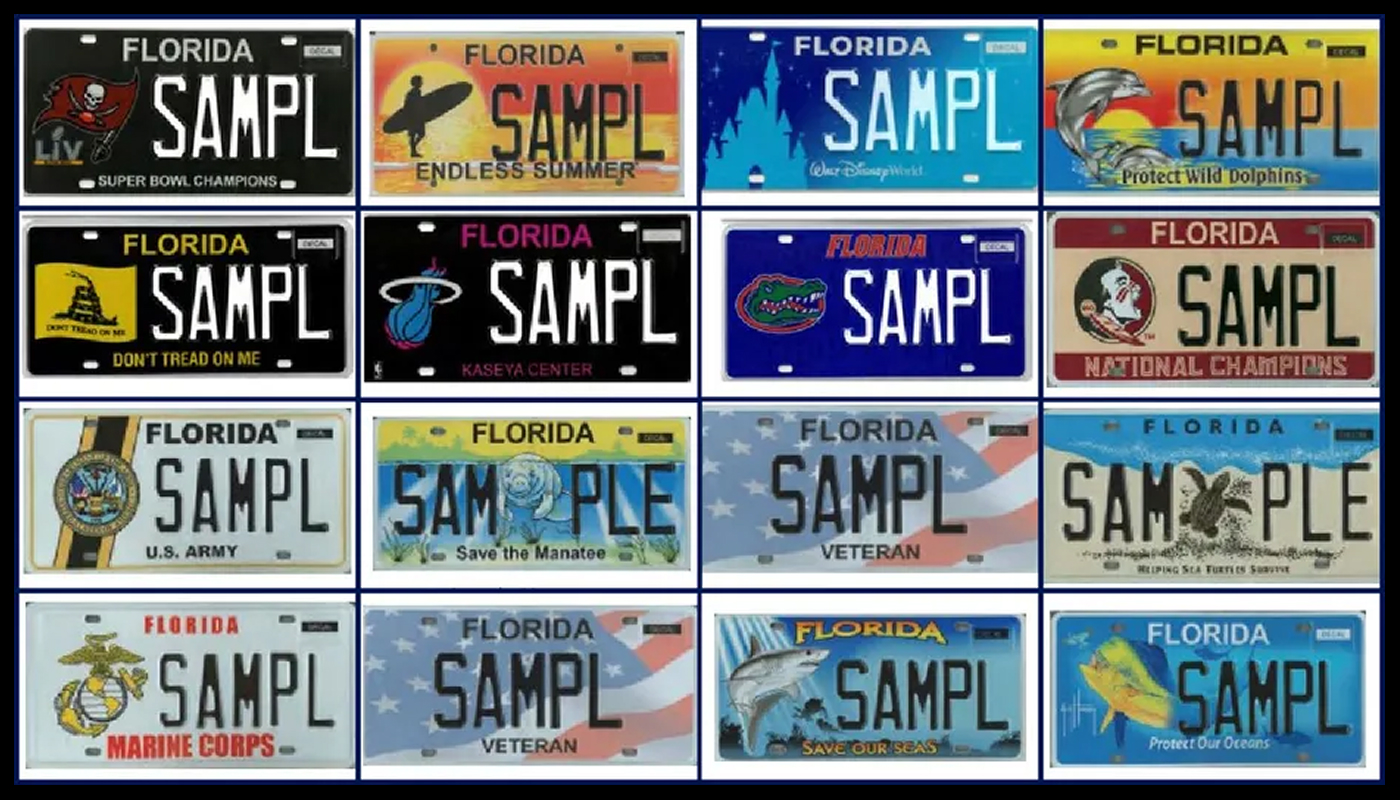
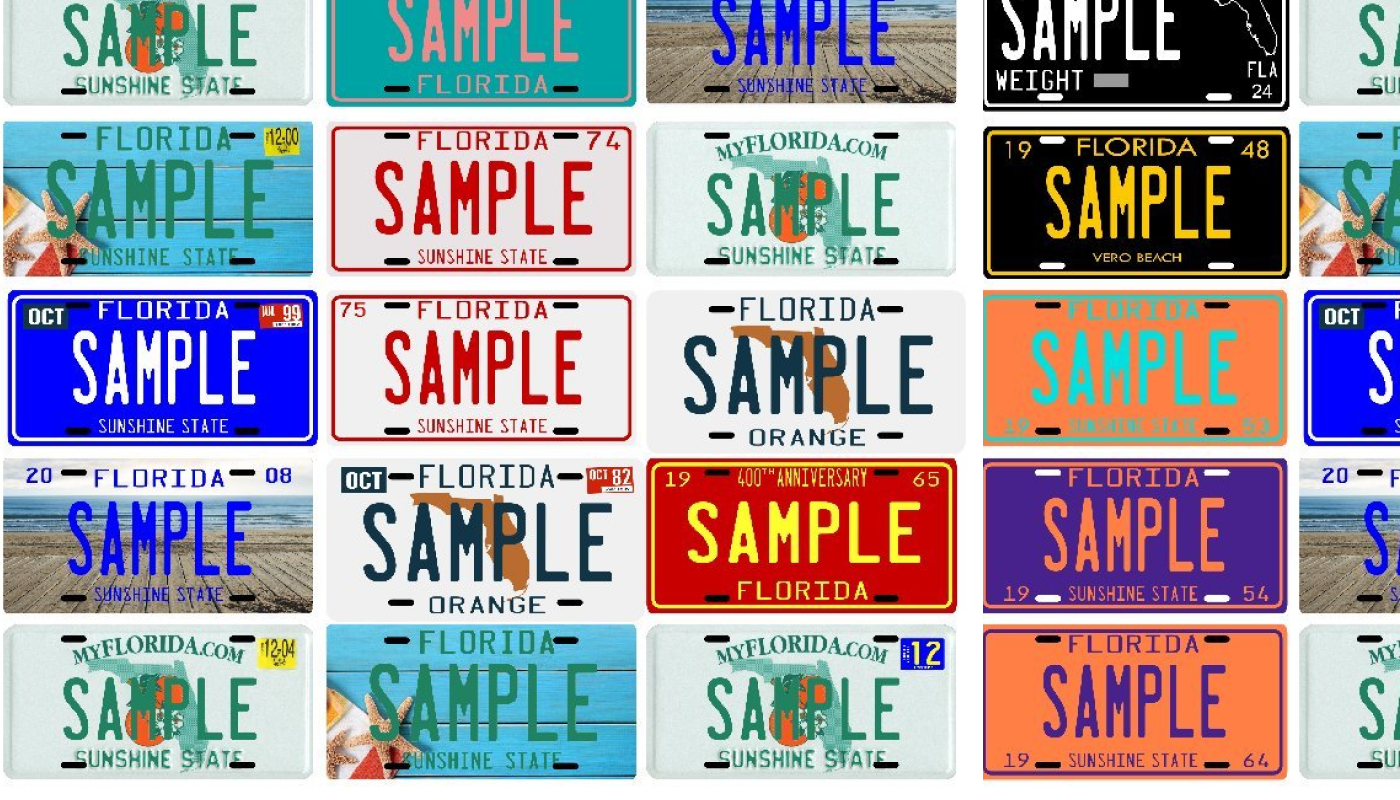
Florida’s license plates are among the brightest in the United States a blend of vivid colors, high-contrast imagery, glossy finishes, and strong reflectivity. Tourists see them as cheerful pieces of state identity, and designers praise their visibility. But in 2025, researchers began investigating something far more unexpected: how Florida’s unusually bright plate design interacts with modern optical materials like license plate film, and why its intense visual style creates surprising behavior for cameras and ALPR systems.
The Sunshine State’s environment constant sun, strong reflections from water, bright highways, and a mix of warm daylight tones makes optical behavior far more complex than in other regions. When layered with reflective or engineered films, even small details become amplified.
Florida receives more direct sunlight than most US states. Its highways are surrounded by water, glass, pale sand, and bright pavement - all highly reflective surfaces. This combination creates an optical environment dominated by glare, high luminance, and rapidly changing light angles.
Researchers quickly noticed that when Florida’s colorful plates were paired with reflective technologies, such as reflective number plate film, the surrounding environment magnified even the smallest scattering effects. Sunlight hit plates from low angles in the morning, vertically at noon, and horizontally near dusk generating constantly shifting reflection fields.
This is why Florida became a natural laboratory for studying how optical coatings behave in real-world conditions.
Florida’s plates are not just colorful; they are engineered with strong graphical contrast. Orange fruit, green leaves, bold lettering all elements that create sharp tonal transitions. Under direct sunlight, these transitions become even more extreme.
When covered with an advanced license plate film, especially one with micro-layer structures, the results were surprising. Bright color zones and dark letter zones interacted differently with engineered reflectivity, creating scattered reflections and unstable contrast for machine-vision cameras.
Human eyes still saw the plate clearly. Cameras often did not.
This duality - human clarity vs sensor inconsistency became one of Florida’s most intriguing characteristics for optical testing.
Drivers sometimes compare advanced coatings with basic products like an anti radar sticker or a simple anti camera license plate sticker. But in Florida’s environment, these basic tools behave inconsistently.
Glare-based anti-camera stickers depend heavily on angle, exposure, and shadow. Florida’s shifting sunlight eliminates their reliability. The intense brightness flattens glare effects and reduces the momentary spikes required for such stickers to work.
By contrast, more advanced coatings interact with sunlight continuously. A layered anti radar license plate sticker, engineered for wavelength-level diffusion, alters the path of light regardless of time of day. Florida’s harsh illumination exposes a major difference: primitive glare is unstable, while engineered scattering is persistent.
In other words, Florida reveals the weakness of basic solutions and the strength of structured optical engineering.
The most revealing tests involved combining Florida plates with reflective number plate film engineered for controlled brightness. Instead of returning light smoothly, these films dispersed illumination across different micro-paths. In moderate lighting, such dispersion is subtle. In Florida’s intense conditions, it became dramatic.
Drivers in Miami or Tampa might not notice anything unusual. But ALPR cameras recorded frames with:
The phenomenon wasn’t caused by any malfunction. It was purely environmental physics interacting with engineered optics.
Most US plates use muted tones and simple designs, but Florida’s plates have layers of contrasting elements that behave differently under light. When exposed to engineered films or optical coatings, each color segment reflects slightly differently.
During testing, researchers observed that:
This created a highly dynamic light field a kind of optical mosaic - that cameras struggled to interpret consistently.
It turns out that “bright design” is not just aesthetic. It is an active participant in optical behavior.
Florida’s bright designs improve visibility for humans, especially in sun-heavy conditions. But the same brightness becomes a challenge for automated systems. The combination of intense ambient light, vivid plate graphics, and engineered optical films produces a uniquely unstable environment for cameras.
Other states reveal half the effect. Florida reveals the whole spectrum.
As a result, Florida plates have become invaluable for studying how optical materials from reflective coatings to anti radar license plate sticker technologies - behave in extreme lighting.
Florida’s license plates are more than decorative. In 2025, they became a perfect storm of color, light, and optical unpredictability. Their bright designs interact with reflective coatings in ways few other states can match.
Here, brightness doesn’t just illuminate. It transforms. It destabilizes. It becomes an optical force of its own.
Florida’s sunshine makes the state a natural testing ground for the future of light-based plate technologies whether reflective, scatter-based, or radar-resistant.
Car
Nanofilm
Vehicle
Written by Alite
Read more
We cover privacy tech, license plate protection & smart ways to stay off surveillance. No gimmicks — just real tools that work. Explore more:
MORE FROM ALITE
Made by drivers, for drivers








Comments
Ethan Walker
13 February 2026
Fascinating how Florida’s sunlight changes optical behavior
Olivia Bennett
19 February 2026
The environmental angle makes this feel research-driven.
Ryan Mitchell
20 February 2026
Great breakdown of light physics in real-world conditions.