
Alite
•
February 20, 2026
•
4 minutes


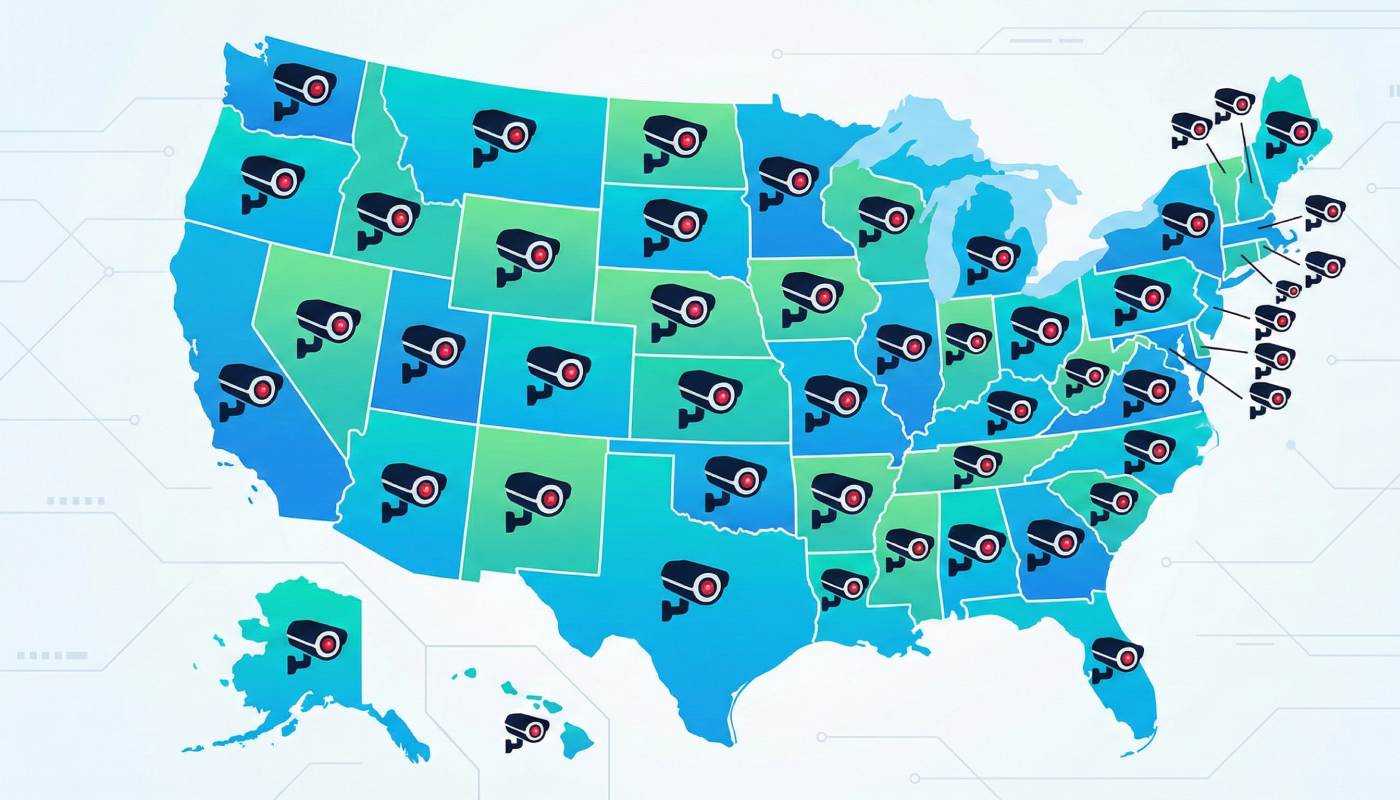
The use of traffic surveillance cameras across the United States is far from uniform. When people ask about traffic cameras by state, they are often surprised to learn that there is no single nationwide standard governing their deployment. Instead, camera usage reflects a patchwork of state-level decisions shaped by infrastructure priorities, public opinion, and historical precedent.
Some states have embraced camera-based monitoring as part of broader traffic management systems, while others have limited or rejected certain applications altogether. This uneven adoption has led to confusion about where cameras are present and what roles they serve.
Understanding this landscape requires separating technology from policy and recognizing that camera systems are implemented differently depending on jurisdiction.
The question are traffic cameras legal does not have a simple yes-or-no answer. Legality depends on the type of camera, how data is collected, and how that data is used. States define these parameters independently, resulting in varied approaches.
In some states, cameras are used extensively for traffic flow monitoring, tolling, and intersection analysis. In others, their use is more limited or restricted to non-enforcement purposes. The distinction often lies between surveillance for infrastructure management and automated systems that associate events with individual vehicles.
States that allow broader use typically integrate cameras into centralized traffic systems, while restrictive states may limit camera data to anonymized or aggregate forms. This difference shapes not only where cameras appear, but also how they function.
While policies differ, certain patterns emerge when examining traffic cameras by state. Cameras are most commonly found in areas with dense traffic, complex intersections, or significant commuter flow.
Typical deployment scenarios include:
In these environments, cameras are used to optimize signal timing, monitor congestion, and collect data for infrastructure planning. Even in states with stricter rules, cameras may still operate in these roles without focusing on individual identification.
The presence of cameras does not necessarily imply enforcement. In many cases, they function as data-gathering tools rather than violation-tracking systems.

An anti camera license plate sticker does not interact with the policy side of surveillance. Instead, it relates to the technical stage where cameras capture visual information. This distinction is important when discussing camera use across states.
Traffic cameras, regardless of jurisdiction, rely on optical assumptions. They expect license plates to reflect artificial light—often infrared—in a predictable way. Materials that alter this reflection can affect how clearly a plate appears in captured images.
Factors influencing this interaction include:
This explains why a plate may appear normal to the human eye while behaving differently under automated imaging, independent of where the camera is located.
The term antiradar sticker is often misunderstood. These materials do not interact with radar signals used for speed measurement or detection. Their relevance lies solely in how they influence the camera’s ability to capture a clear image.
Across different states, camera hardware varies, but most systems share similar optical principles. They use short exposure times and artificial illumination to capture readable plates quickly. Materials engineered to scatter or redirect light can introduce variability into this process.
Alite Nanofilm is an example of a nanostructured material designed to manage light interaction at a microscopic level. Rather than relying on surface coatings, its optical behavior is embedded within the film itself. This allows it to remain visually unobtrusive while responding differently to infrared or flash-based illumination.
Because the interaction is based on physics rather than policy, the material behaves consistently regardless of the state in which a camera operates.
Traffic surveillance cameras are not governed by a single national rule. When examining traffic cameras by state, it becomes clear that their use reflects local priorities and definitions rather than a universal mandate. Asking are traffic cameras legal requires context: legal where, for what purpose, and under what conditions.
While states vary in how they deploy and regulate cameras, the underlying technology remains consistent. Cameras depend on predictable optical behavior to function effectively. Materials such as an anti camera license plate sticker or an antiradar sticker engage with that technical layer, not the regulatory one.
Technologies like Alite Nanofilm illustrate how material science intersects with automated imaging across all jurisdictions. As traffic surveillance continues to expand, understanding both the policy landscape and the physics behind camera systems will remain essential to interpreting how and why these technologies operate throughout the United States.
Car
Nanofilm
Vehicle
Written by Alite
Read more
We cover privacy tech, license plate protection & smart ways to stay off surveillance. No gimmicks — just real tools that work. Explore more:
MORE FROM ALITE
Made by drivers, for drivers











Comments
Brian Foster
21 February 2026
Helpful clarification on policy vs technology.
Melissa Grant
22 February 2026
Clear explanation of state-level differences.
Jordan Ellis
24 February 2026
Well balanced between law and optics.